Lassa Fever Vaccine
-

Fact checked by Robert Carlson, MD
Lassa Fever Vaccine Candidates 2025
The U.S. Food and Drug Administration (FDA) and the European Medicines Agency (EMA) have not approved vaccines for the Lassa fever virus (LASV). As of December 2025, four Lassa fever vaccine candidates have been tested in human clinical trials. Given its potential to cause a public health emergency of international concern, LASV is included in the World Health Organization (WHO) R&D Blueprint, a list of priority pathogens for which there is an urgent need for accelerated research, vaccine development, and countermeasures. The WHO has ranked Lassa (arenaviruses) as the most likely animal virus to spill over into humans ahead of Ebolavirus.
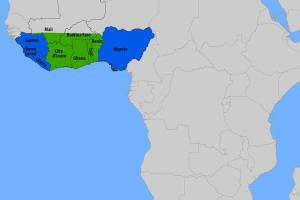
The International AIDS Vaccine Initiative (IAVI) LASV vaccine candidate is conducting research (IAVI C105 and C102) to evaluate the Safety, Tolerability, and Immunogenicity of the rVSV∆G-LASV-GPC Vaccine in Adults and Children living in West Africa. As of 2025, Ghana, Liberia, and Nigeria are vaccinating volunteers. The Coalition for Epidemic Preparedness Innovations supported a Phase I (clinical trial IAVI C102). Batavia Biosciences manufactured the IAVI's LASV vaccine candidate in Leiden, the Netherlands.
rLASV/IGR-CD, developed by the Texas Biomedical Research Institute, The Scripps Research Institute, and the National Institute of Allergy and Infectious Diseases, incorporates both attenuation determinants and further enhances the vaccine's safety. Data published in November 2024 support the development of rLASV/IGR-CD as a live-attenuated LF vaccine with stringent safety features.
The Lassa fever vaccine candidate LASSARAB uses a deactivated rabies virus platform to deliver antigens to protect against the Lassa fever virus. Researchers from Thomas Jefferson University and the University of Maryland, Baltimore, in collaboration with the United States Army Medical Research Institute of Infectious Diseases and the Geneva Foundation, have developed LASSARAB, a Lassa fever vaccine candidate.
ChAdOx1-Lassa-GPC is a chimpanzee adenovirus-vectored vaccine candidate encoding the Josiah strain LASV glycoprotein precursor gene.
Themis Bioscience GmbH is a recombinant, live-attenuated, measles-vectored Lassa fever vaccine candidate (MV-LASV). In a first-in-human phase 1 trial, MV-LASV (V182-001) showed an acceptable safety and tolerability profile, and immunogenicity was unaffected by pre-existing immunity against the vector.
Inovio discontinued the development of product candidates targeting Lassa Fever (INO-4500) on November 17, 2022.
Lassa Fever Overview
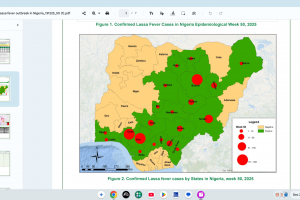
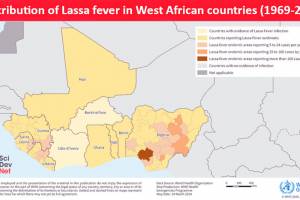
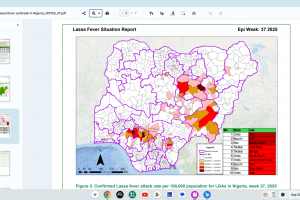
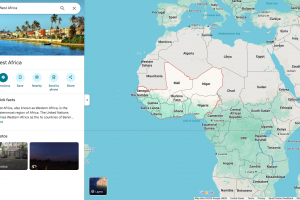
Lassa fever (LF) is an acute viral hemorrhagic fever (VHF) caused by the Lassa virus. The natural reservoir for the LASV is the Mastomys natalensis rodent (African rat). Lassa virus is endemic in the West African countries of Benin, Ghana, Guinea, Liberia, Mali, Nigeria, and Sierra Leone. A detailed estimate of the damage caused by LASV outbreaks, published in August 2024, has found that it infects 2.7 million people annually, ten times more than health agencies had previously assumed. Modelling research predicts that up to 600 million people could be at risk of Lassa fever infection by 2050, due to the combined effects of climate change and population growth.